2016年11月29日火曜日

伝統工芸士紹介 小松昭雄


・1946年よりロクロ細工一筋に取り組む。
 先人から受け継いだ、肥松他銘木の磨き仕上(挽物)の技を得意とし
 すばらしいロクロ細工による挽物作品を創作し続けている。
・主な作品は、丸盆、菓子器、茶托、棗など。 
 
 
He's sending a life of a Turnery-work only way more than 1946 years.
He makes work of (turnery) good at polish finishing of the fertilizer pine precious wood of other ones inherited from a pioneer.
 
He keeps creating a turnery work by wonderful ROKURO(Turnery) workmanship.
 
 
Traditional Handicrafts

Miyajima-Rokuro Zaiku(Turnery)   

 This skill is said to have been introduced in Miyajima during the period 1848 to 1858. A manual turner was then used, but in the early-mid Meiji period, a foot step was developed, and the skill of Rokuro Zaiki rapidly developed as other technology evolved. During the end of the Meiji and Taisho periods, nearly 300 turnery craftsmen moved to Miyajima in order to refine their skills.
This skill is passed down even now, and there are a wide range of daily use products such as round trays, sweet containers, tea powder containers, tea cup trays, incense containers, and other artistic pieces of work.

Every product has the warmth of a handmade craft, and this is because people in Miyajima also passed down the feeling of care and love in their preservation of nature and trees. It is not brightly lacquered, no colored, yet it has a unique depth.
The natural grain is the most enduring feature of Miyajima Rokuro Zaiku. 


伝統工芸士紹介 佐藤 満


1943年より父である、初代‐佐藤木寿の元、ロクロ細工を始める。
 

先代から受け継いだ技術と長年の経験からロクロ細工全般を極め、現在も
日常使用品から大作まで幅広い工芸品を創り続ける。 


He has begun Miyajima-Rokuro Zaiku(Turnery) in 1943 by father's guidance.
He acquired everything of ROKURO workmanship from the technology inherited from his father and long experience.He keeps creating wide work from items to a masterpiece daily.
 
 
・主な作品:木肌を活かした飾り盆 茶櫃 茶托 なつめ コネ鉢
 Main technique:The natural taste Tea wares.
 
佐藤満が語る先代とロクロ細工

Traditional Handicrafts

Miyajima-Rokuro Zaiku(Turnery)


This skill is said to have been introduced in Miyajima during the period 1848 to 1858. A manual turner was then used, but in the early-mid Meiji period, a foot step was developed, and the skill of Rokuro Zaiki rapidly developed as other technology evolved. During the end of the Meiji and Taisho periods, nearly 300 turnery craftsmen moved to Miyajima in order to refine their skills.
This skill is passed down even now, and there are a wide range of daily use products such as round trays, sweet containers, tea powder containers, tea cup trays, incense containers, and other artistic pieces of work.

Every product has the warmth of a handmade craft, and this is because people in Miyajima also passed down the feeling of care and love in their preservation of nature and trees. It is not brightly lacquered, no colored, yet it has a unique depth.
The natural grain is the most enduring feature of Miyajima Rokuro Zaiku.


伝統工芸士紹介 平山 宣昭


昭和48年より現在の仕事に従事し、平成19年に伝統工芸士の認定を受ける。 
得意な技法は、 宮島彫りならではの細かい紋様を彫り込んだ麻の葉地模様等作品が得意。

主な製品: 丸盆大小 箱物 角盆 菓子器 お茶道具
受賞歴:
 平成22年6月 広島県立美術展 第62回入選作品 食籠 椿と麻の葉地模様
 平成22年11月 第13回日本伝統工芸士会作品展 特選 作品 丸盆牡丹と麻の葉地模様


2016年11月28日月曜日

新しいPOPで作品を紹介

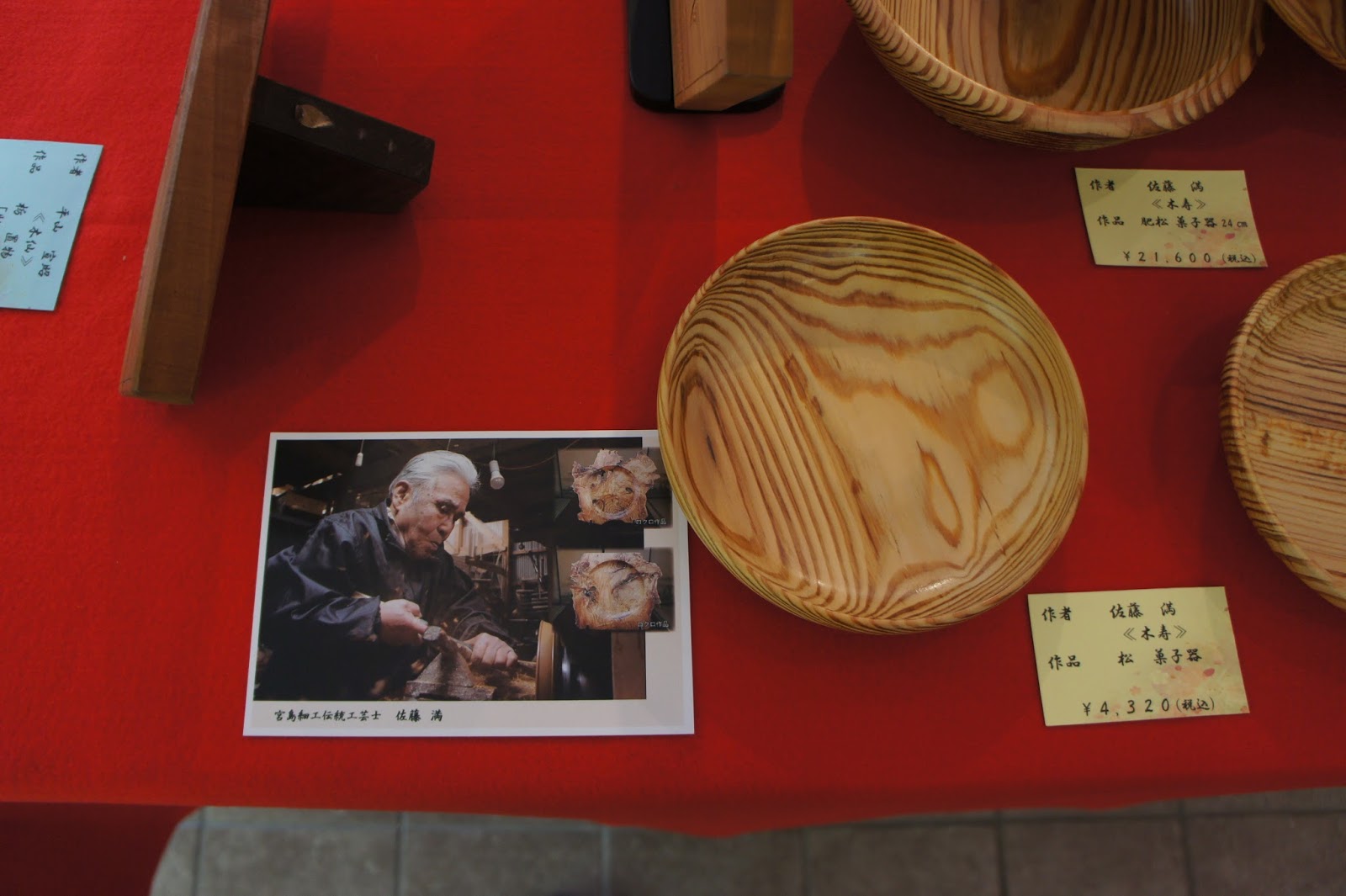
宮島細工伝統工芸士の作品が展示されている1Fギャラリー
伝統工芸士のロクロ作品、彫刻作品がより深くご紹介させて
頂けるように新しい紹介POPを作成し展示致しております。
作家の制作風景と作品を紹介しています。
伝統工芸士の技と心が伝わるよう展示しております。


2016年11月27日日曜日

杓子づくり体験

宮島の思い出づくりにピッタリ!杓子(しゃくし)づくり体験。
あなただけの『オリジナル杓子』が出来ます♪

写真をクリックすると詳しい情報が配信されます!

 
真っ白な杓子を自分の好きな柄にデザインします!
 
焼き鏝(コテ)を使った模様を付けます。

鳥居や桜、紅葉などの柄があります。